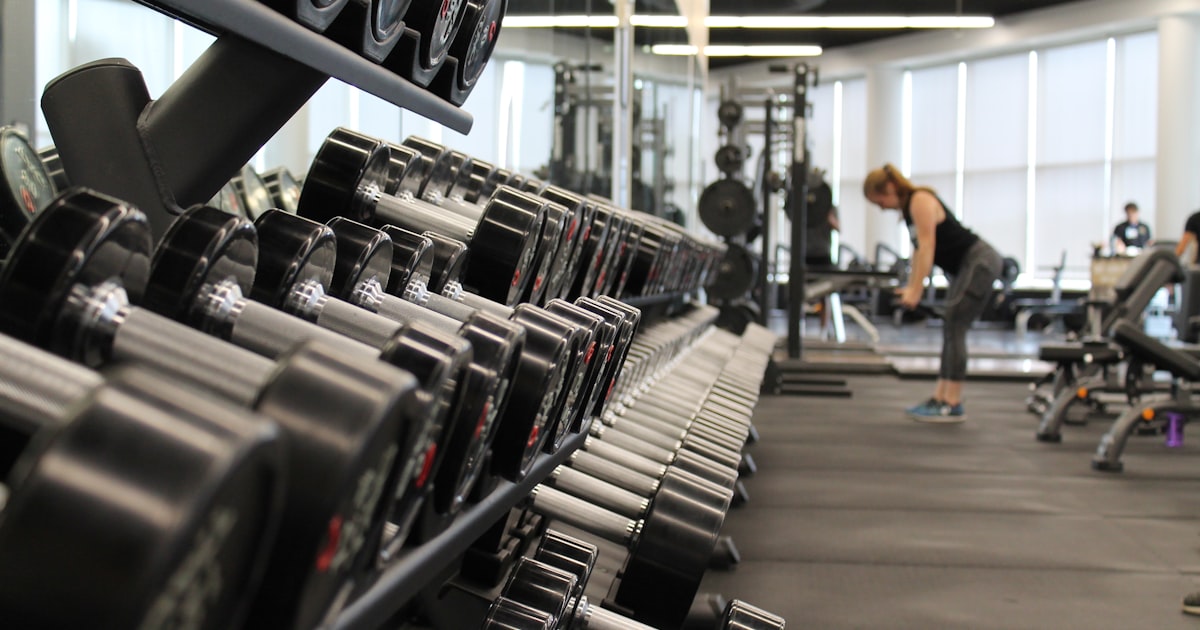
You don't need a $5,000 Peloton setup or a commercial gym membership to get an incredible workout at home. Some of my most successful client transformations have happened with nothing more than a few pairs of dumbbells, a resistance band, and a corner of the living room. Let me show you how to build a highly effective home gym without breaking the bank.
The biggest obstacle to consistent fitness isn't motivation — it's friction. Every step between you and your workout (driving to the gym, finding parking, waiting for equipment, driving home) is a potential excuse to skip. A home gym eliminates all of that friction. Your workout is ten steps away, available at any hour, and completely on your terms.
The Essentials: Under $150 Total
Here's what I recommend for a starter home gym that covers the vast majority of exercises you'll ever need:
1. Two Sets of Dumbbells ($40 - $60)
Start with a lighter pair (8 to 12 pounds) and a heavier pair (15 to 25 pounds), depending on your current strength level. If you're brand new to lifting, go with 5-pound and 10-pound pairs. These two sets will cover upper body exercises, goblet squats, lunges, deadlifts, and more.
Budget tip: Check Facebook Marketplace and thrift stores. Used dumbbells work exactly as well as new ones, and people sell them constantly.
2. Resistance Bands Set ($15 - $25)
A set of loop resistance bands in varying tensions (light, medium, heavy) is one of the best investments in home fitness. They're incredibly versatile: use them for warm-ups, glute activation, upper body work, assisted stretching, and adding resistance to bodyweight movements. They also weigh nothing and take up zero space.
3. A Yoga Mat ($15 - $20)
You need a non-slip surface for floor work — planks, push-ups, stretching, ab exercises. A basic yoga mat is sufficient. You don't need a premium mat unless you're doing a lot of yoga; for strength and HIIT training, any standard thickness mat works fine.
4. A Jump Rope ($8 - $12)
The most underrated piece of cardio equipment in existence. Five minutes of jump rope burns roughly the same calories as ten minutes of jogging, and it's far more joint-friendly because you control the impact. It's also one of the best warm-up tools available.
5. A Timer App (Free)
Download any free interval timer app on your phone. You'll use it for HIIT intervals, rest periods between sets, and keeping your workouts efficient. A workout without a timer tends to drift — you rest too long, you lose intensity, and a 30-minute session stretches to 50 minutes without extra benefit.
Nice to Have: The Next Level ($50 - $100 More)
Once you've been training consistently for a month or two and want to expand your options:
Adjustable Dumbbells
If you're outgrowing your starter weights, adjustable dumbbells that go from 5 to 50 pounds are a space-saving alternative to buying multiple pairs. They're more expensive upfront but cheaper than buying six different dumbbell sets over time.
Pull-Up Bar (Doorframe Mount)
A doorframe pull-up bar opens up an entire category of exercises: pull-ups, chin-ups, hanging leg raises, and dead hangs for grip strength and spinal decompression. Most decent ones cost between $20 and $35 and install without tools or screws.
Kettlebell
A single kettlebell in the 15 to 25 pound range adds dynamic, full-body movements to your repertoire: kettlebell swings, goblet squats, Turkish get-ups, and cleans. The kettlebell swing alone is one of the most effective posterior chain exercises you can do at home.
Foam Roller
Recovery is part of fitness. A foam roller helps with self-myofascial release — essentially a self-massage that reduces muscle tightness and improves mobility. Five minutes of rolling after a workout can dramatically reduce soreness and speed up recovery.
Setting Up Your Space
You don't need a dedicated room. Here's what you actually need:
- Floor space: Roughly 6 feet by 6 feet — enough to lie down with arms extended and to lunge in any direction.
- Storage: A small basket or corner shelf for your dumbbells and bands. Everything should be visible — equipment you can see is equipment you'll use.
- Flooring: Your yoga mat handles this on hardwood or tile. If you're in a garage or basement, interlocking foam floor tiles (around $20 for a set) provide cushioning and protect your floor from dropped weights.
- Ventilation: A fan or open window makes a big difference during intense workouts. You'll overheat fast in a small, enclosed space.
What You Don't Need
The fitness industry thrives on selling you equipment. Here's what to skip:
- Treadmill or elliptical. Walking outside is free. HIIT cardio with bodyweight or jump rope is more effective. These machines take up massive space and often become expensive clothes hangers.
- Ab machines. Planks, dead bugs, mountain climbers, and bicycle crunches are superior to any gadget. Your core doesn't need a machine — it needs consistent training.
- Cable machines or smith machines. These are great in a commercial gym but make no sense for a home setup at this level. Free weights and bands cover the same movement patterns with far less cost and space.
- Anything from a 2 AM infomercial. If it promises to "blast your abs in 5 minutes a day," it belongs in a landfill, not your home gym.
A Sample Home Workout (Using Only the Essentials)
To prove how much you can do with minimal equipment, here's a full-body workout using just dumbbells and a mat:
- Goblet Squat — 3 sets of 12 reps (heavy dumbbell)
- Dumbbell Romanian Deadlift — 3 sets of 10 reps (heavy dumbbells)
- Push-Ups — 3 sets of 10-15 reps (bodyweight)
- Single-Arm Dumbbell Row — 3 sets of 10 reps each side (heavy dumbbell)
- Reverse Lunge — 3 sets of 10 reps each leg (light dumbbells)
- Overhead Press — 3 sets of 10 reps (light dumbbells)
- Plank Hold — 3 sets of 30-45 seconds
That's a complete, balanced workout hitting every major muscle group. Total time: about 35 minutes. Total cost of equipment: under $80.
The best gym is the one you actually use. A home setup you train in five days a week will always outperform a fancy gym membership you use twice a month.
Start Small, Build Over Time
You don't need to buy everything at once. Start with the essentials — a pair of dumbbells and a mat. Train for a month. Then add resistance bands. A few weeks later, maybe a kettlebell. Let your gym grow as your fitness grows.
The goal is to remove every barrier between you and your workout. When fitness lives in your home, it becomes part of your daily routine rather than an event you have to plan around. And that's where real, lasting transformation happens.